A Calm Routine That Teaches Stability Better Than Words
How a calm family routine gives children a sense of security‚ builds trust and helps the whole family cope with change and stressful periods.
The Power of Daily Habits in Building Security
Habits are not just repeated actions; they are a system of steady messages that convey security. When the day opens the same way‚ even with slight variations‚ children learn that the world is predictable‚ and anxiety about the unknown weakens. A quiet breakfast‚ a short time for reading or walking to school by the same route create a sense of stability. These habits are aimed not only at efficiency but at the soul. Body and mind get used to an even rhythm that soothes and signals: everything is under control‚ everything is fine.
Balancing Repetition and Flexibility
A calm routine is not monotonous; it aims for a balance between repetition that inspires confidence and freedom that allows spontaneity. When there is a general framework‚ such as set mealtimes‚ rest time and a family get-together‚ every small deviation is accepted naturally and not as chaos. It is a space that lets children develop while feeling protected and lets parents keep their inner order. A little flexibility within the routine sends an important message: stability can be gentle too‚ and order can make room to breathe.
Adults as a Model of Calm
The way adults manage their daily routine directly affects the atmosphere at home. When a parent works at a relatively unhurried pace‚ plans their day and responds calmly to changes‚ the message gets through without needing to be explained. Children learn from observation‚ not from instructions. If the home has an even‚ undramatic rhythm‚ everyone feels it is all right to make mistakes and fix them. This is how emotional resilience is built - not through words but through a daily experience of calm.
How Emotional Continuity Supports Healthy Family Communication
A stable routine also affects the quality of communication. When there is no constant sense of pressure‚ conversations at home are calm. Dialogue does not erupt but builds up. Patience grows‚ listening lasts longer and understanding between generations widens. Repetition in daily activities creates emotional breathing room in which a kind word can be said at the right time‚ and real listening can happen without competing with the bustle of life.
Choosing Fixed Frameworks for Children
Children thrive when their surroundings are predictable. Fixed frameworks‚ such as kindergarten‚ after-school activities and bedtimes‚ give them a sense of security and the ability to regulate themselves. When transitions are well planned‚ there is no feeling of losing control. A calm routine does not mean rigidity; it is based on a stability that grants inner freedom. Children know when the day starts and when it ends‚ and the body adjusts itself to the family rhythm.
How Outer Order Affects Inner Calm
An organized‚ clean environment affects mood. When things are in their place‚ the mind is free to think and feel. Perfectionism is not needed‚ just a gentle sense of structure. A partly tidy children's room‚ a kitchen waiting for a new day without clutter - all of these convey calm. The body responds to an orderly environment just as it responds to calm music. Outer order teaches the soul to breathe at an even‚ calm pace.
The Family Routine as a Source of Values
Family members learn their values from everyday actions. If there is a shared dinner every evening‚ the message is that being together matters. If on Fridays the house fills with the smell of unhurried cooking and easy conversation‚ a homey feeling forms that instills values of connection. A calm routine is not just an order of actions but a family language that speaks of love‚ patience and mutual responsibility.
What a Routine Adds to Physical and Mental Calm
The human body has an internal clock that responds to repetition. Sleeping at similar hours‚ eating regularly and a daily walk regulate the nervous system and reduce stress. When the body is calm‚ the mind becomes clearer too. The whole family enjoys the cumulative benefit of balanced energy: fewer outbursts‚ less burnout and more serenity. This creates a natural sense of family resilience.
How Fixed Rituals Create a Sense of Continuity
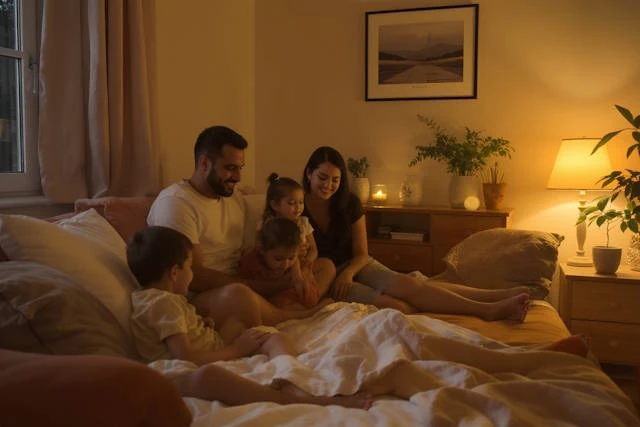
Daily rituals‚ like reading a story before bed or a short talk at the end of the day‚ give a sense of orderly closure. They become cherished moments that link yesterday and tomorrow. Such rituals benefit adults as well: a cup of tea in the evening‚ a to-do list for the next day or a deep breath before turning off the light. Small rituals are a reminder that life moves at a reasonable pace and that there is control even in busy times.
Balancing Work and Rest
In homes where there is awareness of the right division of time between doing and resting‚ a basic calm takes hold. Understanding that rest is part of functioning and not its opposite changes the whole outlook. When parents make time for themselves‚ children understand that a break is a value too. A calm routine includes breathing spaces where there is no need to get things done - just to be. In these breaks‚ the family fills up with new strength.
The Effect of Set Time for Family Interaction
An hour a day when the family gathers‚ not necessarily around food but also for a conversation or a shared activity‚ creates a sense of unity. It is presence‚ not quantity‚ that counts. When these gatherings recur regularly‚ a pattern forms that strengthens trust and reduces emotional distance. Children learn that they can talk even without a special reason‚ and adults feel that family time is protected despite the fast pace of life.
Strengthening a Sense of Belonging Through a Steady Rhythm
A sequence of actions repeated every day creates a unique family identity. As children grow up‚ these memories stay in their hearts: the smell of the morning‚ the sound of the door closing at the same hour‚ the familiar phrase before bed. Every small detail becomes a symbol of home. In this way the routine becomes a shared story that continues even as the family changes. It is an anchor that holds identity steady‚ even in times of change.
The Link Between Family Stability and the Ability to Cope
Families that keep a calm routine tend to cope better with crises. When life presents challenges‚ the routine serves as a stable base that prevents emotional collapse. Even during a busy period or an unexpected event‚ the fixed structure provides a sense of control and a framework that allows quick recovery. This makes it a survival tool no less than a convenience.
How a Routine Builds Mutual Trust
When actions are predictable‚ trust grows. A parent who keeps small promises‚ like a set time for reading or a weekly outing‚ teaches children that their words can be relied on. This sense of trust does not form quickly; it is built on consistency. When someone knows the rhythm can be counted on‚ they feel safe to open their heart. This may be the greatest gift a calm routine offers.
Bringing Calm Into the Physical Space
A home that radiates serenity combines soft light‚ natural colors and gentle scents. The physical atmosphere affects the routine no less than the schedule. When there is a cozy reading corner‚ a tidy dining area or a window that opens to natural light‚ the body relaxes and the pace slows. Designing the home as part of the routine creates the feeling that calm is not a passing moment but a lasting state of balanced living.
In Summary
A calm routine is not just an order of actions but a system of trust‚ stability and a sense of home. It teaches children perseverance‚ strengthens adults and gives everyone a sense of control in a changing world. When the routine is built gently and with respect for the pace of each family member‚ it becomes a source of strength rather than fatigue. It is everyday simplicity that creates the deepest security - a security learned not from words but from a life that repeats itself at a calm‚ consistent and loving pace.